
South Africa is a country of long roads. Johannesburg to Cape Town is about 1 400 km. Durban to Gqeberha is close to 900 km. Even a “quick” weekend away from Gauteng to the Lowveld or the Free State means four or five hours behind the wheel. If you regularly arrive with a stiff lower back, numb legs or a sore behind, you are not alone. The good news is that most of it can be prevented with a few simple changes.
Why long drives hurt
When you sit in one position for hours, a few small areas of your body carry most of your weight: your seat bones, the backs of your thighs and your lower back. Pressure on those areas slows blood flow to the muscles. Muscles that are not getting enough blood and oxygen stiffen and start to ache. Add road vibration, potholes and gravel corrugations, and your spine takes a constant series of small knocks.
Discomfort also has a safety cost. A driver who is uncomfortable fidgets, shifts around and loses focus. Comfort and alertness go together.
1. Set up your seat properly before you leave
- Distance: you should be able to press the clutch or brake fully with a slight bend still in your knee.
- Back angle: sit upright with the backrest slightly reclined, around 100 to 110 degrees. Lying back too far pushes your head forward and strains your neck.
- Height: your hips should be level with or slightly higher than your knees.
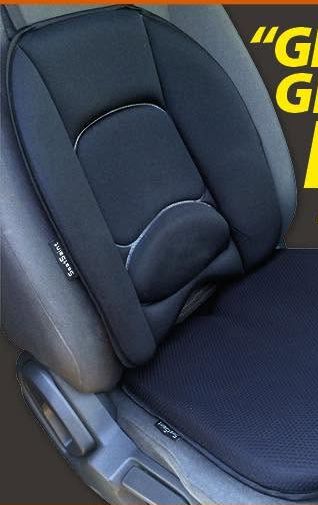
- Lower back: the natural curve of your lower back should be supported. Most factory seats do this poorly, which is where a lumbar support helps.
- Steering wheel: with your shoulders against the seat, your wrists should rest on top of the wheel.
2. Stop every two hours
This is the single most important habit. Plan your stops before you go. On the N1, for example, Kroonstad, Bloemfontein, Colesberg, Richmond, Beaufort West and Laingsburg all make natural break points. Get out of the car, walk around for five to ten minutes, and gently stretch your hips, hamstrings and lower back.
We do not encourage anyone to drive or ride all day without breaks, no matter how comfortable their seat is. A break resets your circulation, your muscles and your concentration.
3. Drink water, more than you think
Hydration is very important on the road. Many drivers avoid drinking so that they do not have to stop, but mild dehydration makes you tired, gives you headaches and makes muscles more prone to cramping and stiffness. Keep a bottle within reach and sip regularly. If it means one extra stop, that is a bonus, not a problem.
4. Move while you drive
On a long, straight stretch you can still move a little. Gently squeeze and release your glutes, roll your shoulders, change your grip on the wheel and shift your weight slightly from side to side. Small movements keep blood flowing.
5. Use a proper seat cushion and lumbar support
Factory seats are designed to fit the average body for an average trip. They are not made for eight hours on the N1. A good seat cushion spreads your weight and soaks up vibration.
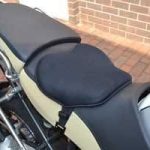
SeatSaint cushions are not memory foam. They are built around a gel pad from the medical seating industry, supported by our patented design. The design keeps you stable while allowing a little movement between the seat and your pelvic bones, which encourages better blood flow and muscle oxygenation. Our customers report better comfort, less distraction, better alertness and fewer aching pains.
One customer drove 6 000 km through Namaqualand in a 1976 Land Cruiser and finished without a sore behind. Another covered 30 000 km across South America on a SeatSaint.
For bakkies and SUVs such as the Hilux, Ranger, Fortuner, Navara and D-Max, the SeatSaint SUV Seat & Backrest Set supports both your seat and your lower back. In a sedan or hatchback, start with the 2G-1 Gel Seat Cushion and add the Back & Lumbar Support if your lower back is your main complaint.
6. Look after yourself at the end of the day
When you arrive, take a short walk before you sit down again. A few gentle stretches for your hips and lower back help your body recover, and a good night’s sleep does the rest.
Quick checklist
- Seat and steering wheel adjusted before you leave
- Lower back supported
- Breaks planned every two hours
- Water bottle within reach
- A cushion that spreads pressure and absorbs vibration
Questions about which cushion fits your vehicle? WhatsApp Adrian on 083 702 1744 or browse the shop.
This article is general information and not medical advice. If you have ongoing back pain, please see a doctor or physiotherapist.